If you have ever woken up in the middle of the night, fumbling blindly for your glass of water or your spectacles, only to find your hand slapping empty air, you aren’t alone. In my 20 years of visiting UK homes—from Victorian terraces with tight alcoves to modern new-builds—the number one complaint I hear is: "I simply can't reach the back of my nightstand."
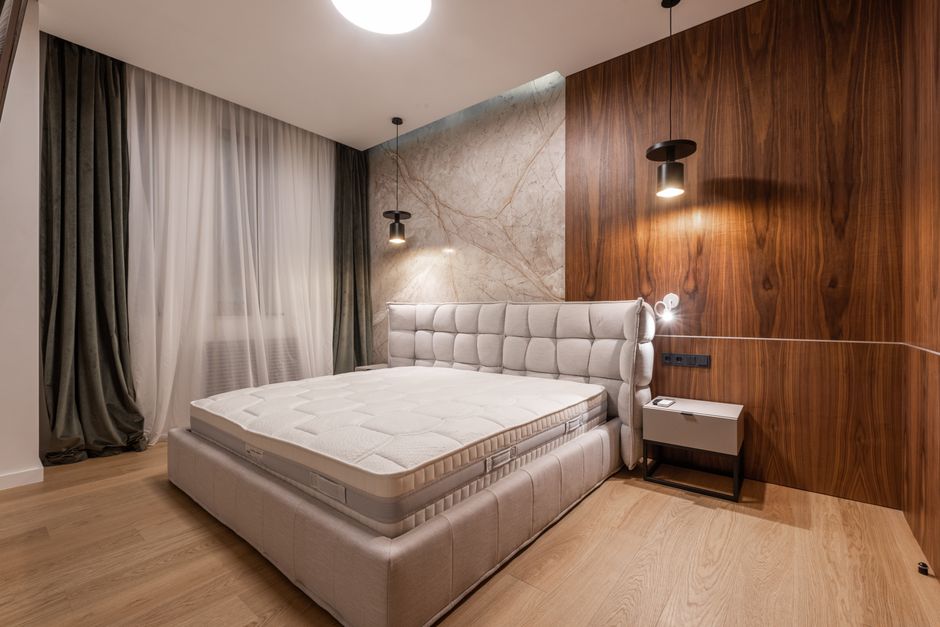
While some might dismiss this as a minor annoyance, it is actually a significant ergonomic failure. When your furniture forces you to over-extend your shoulder or sit bolt upright to grab a midnight essential, your sleep hygiene suffers. If you find yourself frustrated by a 50 cm deep bedside table problem, let’s get the tape measure out and fix it.
The Physics of Reach: Why Your Current Setup Fails
Ergonomics is not just for office chairs. The National Institute of Standards and Technology (NIST) spends a great deal of time studying human movement and spatial interaction. While they focus on industrial standards, the principles of "reachable range" apply perfectly to your bedroom. A comfortable reach for a person lying in bed is usually within a 30-40 cm radius from your shoulder, angled slightly forward.
When you purchase a standard nightstand without checking the depth, you often end up with a piece of furniture designed for aesthetics, not utility. Many mass-market tables are 45–50 cm deep. If you are lying in bed, your arm naturally pivots from the shoulder. Anything beyond that 35 cm mark requires you to twist your torso, which is the primary cause of those "items too far from bed" complaints I see on forums like amumreviews.co.uk.
The Golden Rule: The 5-10 cm Below Mattress-Top Rule
Before you buy your next piece of furniture, you need to perform the most critical step in bedroom planning: Measure floor to mattress top at head of bed. Do not rely on the manufacturer’s "standard" height; a thick pillow-top mattress can easily add 30 cm to the height of a standard divan base.
My ironclad rule for comfort is this: Your nightstand surface should be 5–10 cm below the top of your mattress.
- Why 5-10 cm? This allows you to reach over and down slightly, which is the most ergonomic motion for a sleepy body. If the table is level with the mattress: You are likely to knock items over in your sleep. If the table is higher: You have to "climb" up to reach your items, which is unnatural for a resting position.
Comparative Table: Bed Types and Height Requirements
To give you a better idea of how different setups affect your reach, I have compiled this table based on typical UK bed heights. Always keep your tape measure handy before ordering.
Bed Type Typical Mattress Top Height (cm) Recommended Nightstand Height (cm) Low-profile Platform Bed 40–45 cm 30–40 cm Standard Divan 55–60 cm 45–50 cm Pillow-top/Deep Mattress 65–75 cm 55–65 cmAddressing the "50 cm Deep Bedside Table Problem"
Many of my clients at Petalwood Interiors often find themselves stuck with a beautiful, heavy nightstand that is simply too deep for the space. If your table is 50 cm deep, the back 15 cm of that surface is essentially "dead zone" territory—the Bermuda Triangle for your phone charger and hand cream.

If you find that you can't reach the back of your nightstand, you have three options:
The Pivot: If the table is an heirloom, rotate it 90 degrees if the design allows, or move it slightly forward, accepting the gap between the headboard and the table. The Depth Audit: Aim for tables with a depth of 35–40 cm. This is the "Goldilocks zone" for most bedrooms. The Wall-Mounted Shelf: If space is at a premium, a floating shelf at the correct height allows you to dictate the depth precisely, eliminating the reach issue entirely.How to Measure Correctly: A Step-by-Step Guide
Don't guess. Precision is the difference between a functional sanctuary and a source of nightly irritation. Follow these steps:
Step 1: The Mattress Check
Using your tape measure, find the exact point where you lay your head. Measure floor to mattress top at head of bed https://amumreviews.co.uk/should-bedside-tables-be-higher-than-the-bed/ while you are actually in it (or ask a partner to measure while you are lying down to account for the weight of your body compressing the springs).
Step 2: The Reach Test
Lie on your side. Extend your arm. Mark the spot where your fingertips comfortably rest without you having to stretch your shoulder blade. This distance from your mattress edge is the maximum depth your nightstand should have.
Step 3: The Vertical Check
Ensure the top of your nightstand is between 5 and 10 cm below that mattress measurement you took in Step 1.
Final Thoughts
Is it normal that you can't reach the back of your nightstand? It is common, yes, but it shouldn't be your reality. Bedroom furniture should serve your body, not the other way around. Whether you are dealing with a tall pillow-top mattress or a sleek, low-slung platform frame, the math remains the same.
Stop settling for furniture that forces you to reach into the abyss. Pick up your tape measure, confirm your heights, and ensure your essentials are always within a natural, comfortable reach. After all, you spend a third of your life in bed—don't spend it straining your shoulder for a glass of water.