When selecting a rectangular bathroom mirror, size matters—not just for aesthetics, but also for function, lighting, and seamless coordination with fixtures. Industry guidelines from authorities like the National Kitchen & Bath Association (NKBA), combined with practical insights from electricians and glaziers, shape these sizing decisions. From a single vanity to a double vanity setup, understanding typical width ranges and their relation to lighting layouts ensures you Article source get a wide bathroom mirror that’s both beautiful and practical.
Understanding Mirror Types As Functional Decisions
Before diving into dimensions, it’s important to recall that mirrors in bathrooms are more than decorative panels. The shape, storage options, mounting style, and integrated lighting all influence mirror width, placement, and compatibility with other design elements. Here are the key types and how functional choices impact size:
- Shape: Rectangles dominate for their classic look and ability to align with lighting and cabinetry. Dimensions often range from 24 to 60 inches wide. Storage Options: Medicine cabinets and mirrored wall cabinets generally limit width due to internal shelving. Flat mirrors provide more flexibility, allowing wider spans above vanities. Mounting: Wall-mounted plate glass mirrors are installed by glaziers who template precise dimensions on site, ensuring an exact fit. Frameless mirrors have narrow edge tolerances, demanding tight coordination. Built-in Lighting: LED mirrors and backlit options, increasingly popular from brands like Golden Lighting and available via specialty retailers like Lumens, require electrical feeds and dictate size ranges to accommodate control units and wiring.
For best results, mirrors must be integrated into the lighting plan early in the design process. I always decide lighting before mirror width—it guarantees the sconces or LED lighting fit comfortably and functionally around the mirror.
Typical Rectangular Mirror Width Range: 24 to 60 Inches
Most rectangular bathroom mirrors you find in stores fall between 24 and 60 inches wide. This range covers single-sink vanities to double vanities and beyond.
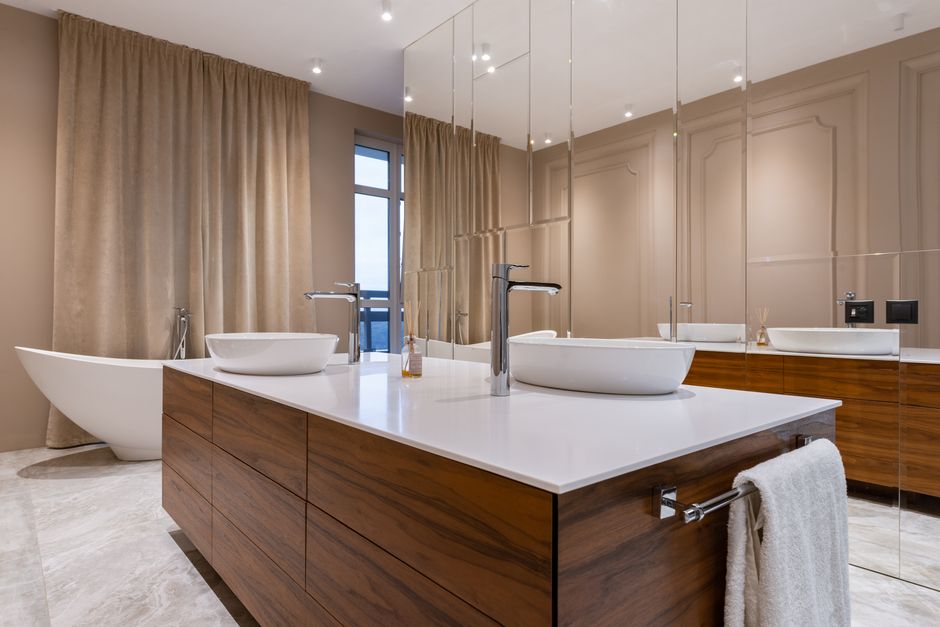
Mirror Type Typical Width Range Common Use Case Small rectangular mirror 24" – 30" Over pedestal sinks or narrow vanity areas Standard single vanity mirror 30" – 42" Standard single sink vanities 24" to 36" wide Large single vanity mirror 42" – 48" Vanities 36" to 48" wide, creating a wide bathroom mirror effect Double vanity mirror 48" – 60" Over two-sink vanities 60" to 72" wide Extra wide & custom mirrors > 60" Custom installations, often frameless and templated by professional glaziersThe double vanity mirror width often targets 48 to 60 inches to span adequately across both sinks without looking cramped or too sparse. Wider mirrors beyond 60 https://discountcleaners.net/is-a-rectangular-mirror-always-the-safest-choice-if-i-have-not-picked-lighting-yet/ inches typically require professional templating and cutting by a glazier to ensure a flush fit against walls and adjacent tiles.
How Mirror Sizing Rules Tie Into Lighting Layout
Vanity mirrors rarely function alone. Proper lighting elevates their utility, and lighting plans dictate mirror width and mounting positions.
Placement Heights and Sconce Spacing
According to the NKBA, wall sconces flanking mirrors should be mounted approximately 65-70 inches from the floor, roughly at eye level for most users. Sconces need about 24-30 inches of lateral clearance to illuminate faces evenly without casting shadows.
This becomes a vital consideration for wide bathroom mirrors. An oversized mirror that stretches into sconce territory creates awkward overlaps, diminishing lighting effectiveness. Conversely, too narrow a mirror leaves wasted wall space.
- Rule of thumb: Leave minimum 3-6 inches clearance between mirror edges and sconces. The total mirror width should accommodate the vanity width minus these sconce clearances, maintaining balanced spacing. Electrical considerations: Electricians must install sconce feeds precisely at mounting heights that correspond with mirror edges.
Task Lighting vs Ambient Lighting Requirements
Task lighting targets the face specifically. Mirror-integrated LED lighting—hardwired and switched separately by electricians—provides shadow-free illumination superior for grooming and makeup. Brands like Golden Lighting, distributed through Lumens, now offer dimmable, color-temperature adjustable mirrors, but their size often drives their light output and control mechanics.
Ambient lighting, often ceiling mounted, complements task lighting but does not replace the need for well-sized, strategically placed mirrors. The mirror must be proportioned to bounce and balance ambient light without overpowering the space or creating glare.
The Role of the Glazier and Electrician in Mirror Installations
A professional glazier is indispensable when dealing with plate glass mirrors, especially larger or custom sizes. They perform on-site templating to create precise mirror dimensions that avoid the pitfalls of undersized or oversized panels, including butting up correctly to tile edges and handling cutouts for wall outlets or sconces.
Electricians coordinate with mirror installers for:
- Hardwired LED mirror feeds (some mirrors require dedicated circuits) Power and switch locations for integrated lighting Installation of GFCI outlets nearby—critical for moisture-safe usage
Early coordination between architects, glaziers, and electricians helps ensure mirrors—whether a typical 24 to 60 inch rectangular mirror or a custom double vanity mirror width—integrate flawlessly with lighting and power, preventing on-site last-minute adjustments that compromise aesthetics or performance.
Practical Tips for Specifying Rectangular Bathroom Mirror Width
Start with lighting: Plan sconces or LED lighting first, per NKBA guidelines. Measure vanity width: Mirror width should be 2 to 6 inches narrower than the vanity width to accommodate sconce spacing. Consider mirror height in tandem with width: Horizontal proportions affect perceived size and lighting coverage. Coordinate early with electricians and glaziers: Confirm electrical feeds and templating deadlines. Choose quality materials resistant to humidity: Avoid unsealed edges or cheap frames that fail prematurely. Demister pad: Especially worthwhile for wide mirrors to prevent fogging.Verdict: Rectangular Bathroom Mirror Width that Works
Rectangular mirror 24 to 60 inches is the mainstream range available in most stores and showrooms. For best function and flair:
- Double vanity mirror width between 48 and 60 inches maximizes functionality without overcrowding. Leave room for sconces—never let mirrors crowd lighting fixtures. Decide lighting layout before choosing mirror width; integrated LED mirrors from Golden Lighting or specialist retailers like Lumens can shift installation requirements. Templating led by professional glaziers ensures perfect fits, especially for oversized or frameless mirrors. Consult electricians early to plan power sources for backlit or hardwired lighting features.
Remember: aesthetics are vital, but practical, code-compliant, durable installations create a bathroom mirror setup that lasts beyond trends.