Choosing the perfect mirror for a 36-inch bathroom vanity isn’t just about aesthetics; it’s a functional decision that intertwines with lighting, placement, and space planning. Getting the size right can enhance your daily routines, complement lighting layouts, and respect design principles that industry leaders like the National Kitchen & Bath Association (NKBA) recommend.
Why Mirror Size Matters More Than You Think
Mirrors in a bathroom aren’t just decorative—they are pivotal to task lighting and visual balance. A mirror that’s too large can crowd out essential lighting fixtures like sconces, while a mirror too small diminishes usability and style symmetry. Typically, the best practice is to select a mirror 2 to 4 inches narrower than the vanity, or about 70–80% of the vanity width. For a 36-inch vanity, this translates to a mirror width of approximately 28 to 32 inches.
This sizing rule respects two critical elements:
- Sconce spacing: Leaving room for wall sconces or flanking lights that provide essential task lighting. Proportions: Ensuring the mirror and vanity don’t overwhelm or look disconnected.
Understanding Mirror Types: Function First
Before settling on size, consider these functional attributes that affect your choice:
Shape
Rectangular mirrors align neatly with vanities and wall sconces, facilitating evenly spaced lighting and clean lines. While popular trends like round or oval shapes abound, heed that they may not accommodate wall sconces well or could appear dated within a few years. Always consider whether you want timeless functionality or a trendy statement—remember, shape impacts how lighting wraps your reflection.
Storage Options
Mirrors with medicine cabinets or hidden storage add utility but usually require a bit more wall depth and careful mounting, often involving collaboration with your glazier to template and install plate glass properly. Consider whether built-in storage will compromise mirror size or sconce placement.
Mounting
Mirrors can be wall-mounted or hung. Heavy plate glass mirrors, especially those wider than 30 inches, often require professional templating and installing by a glazier to ensure stability and even surfaces. Mounting methods influence height and alignment, critical to well-designed lighting integration.
Lighting Integration
Lighting must guide mirror size decisions. Hardwired LED mirrors, available from manufacturers featured on platforms like Lumens, bring illumination directly within the mirror boundaries—perfect for compact vanities but often limiting width to pre-engineered sizes. In contrast, traditional mirrors allow flanking sconces or over-mirror fixtures to supplement lighting.

Consult an electrician during planning to determine if your mirror requires additional electrical feeds or wiring for integrated LED lighting, ensuring compliance with bathroom electrical codes and optimal lighting profiles.
Lighting and Mirror Sizing: Task Versus Ambient
A well-lit bathroom blends task lighting and ambient lighting, and your mirror size can either support or sabotage this balance.
Task Lighting
Task lighting focuses on the user’s reflection for grooming or makeup application. Flanking wall sconces installed alongside a mirror spaced at least 28 inches apart provide even lighting without harsh shadows. If your mirror approaches vanity width, it risks blocking sconce placement, making task lighting uneven.
In this context, sticking to a mirror 2 to 4 inches narrower than a 36-inch vanity (about 32–34 inches) will preserve space for sconces approximately 6 to 8 inches from each mirror edge. Remember, sconces also need 60 to 66 inches mounting height from the floor to the center of the fixture for ideal illumination.
Ambient Lighting
Ambient lighting fills the room with gentle, general illumination. Integrated LED mirrors or overhead ceiling fixtures contribute here. While integrated LED backlit mirrors (from brands on Golden Lighting and Lumens) offer ambient glow, their size must still cohere with your vanity width, so the visual weight feels balanced.
Dashboard LED mirrors without backlighting often require supplemental room lighting. Before deciding a large frameless mirror without wall lights, evaluate whether the ambient light level suffices for safe grooming.
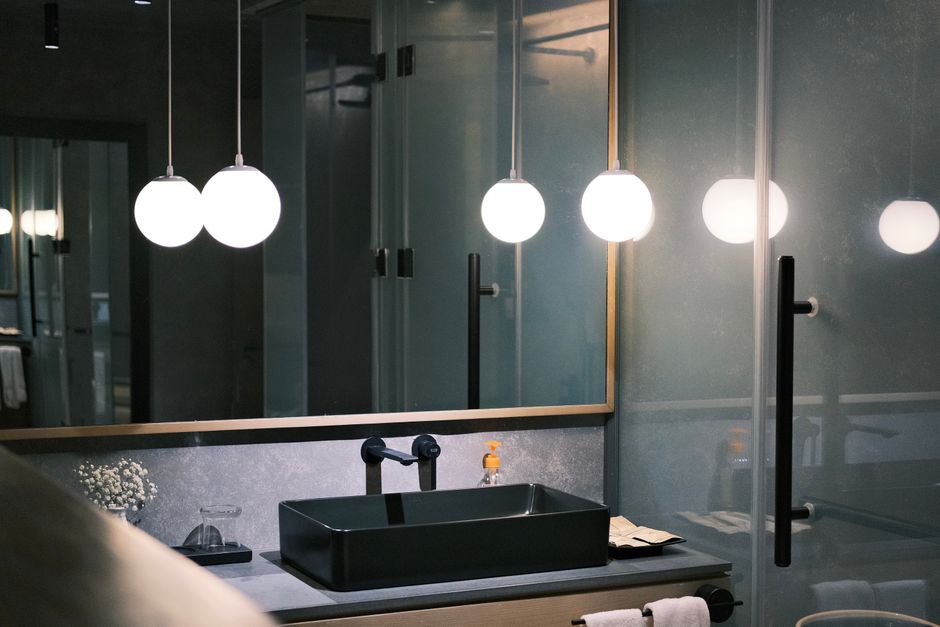
Height and Placement: The NKBA Perspective
The NKBA guidelines provide solid rules for mirror height:
Bottom edge placement: Install mirror bottom approximately 4 to 6 inches above the vanity countertop to maintain a continuous line with backsplash or tile. Top edge height: Place the top of the mirror between 72 and 80 inches above the floor, depending on user height and ceiling height. Centering: Center the mirror horizontally over the vanity, respecting the narrower mirror width recommendation for lighting space.Adjust for wall sconces by ensuring you maintain at least 3 inches clearance between the mirror edge and sconce backplate, allowing a comfortable and functional installation.
A Quick Reference Table for a 36-Inch Vanity Mirror Size and Lighting Spacing
Mirror Width Vanity Width Sconce Clearance (each side) Recommended Mirror Height Mounting Height (Bottom Edge) 28–32 inches (70–80%) 36 inches 6–8 inches 30–36 inches (proportional to vanity height) 4–6 inches above countertopCollaborating with Trades: Electricians and Glaziers
Your mirror size and lighting plans require early coordination with electricians and glaziers to ensure a seamless final installation:
- Electricians: Will handle wiring for hardwired LED mirrors or additional feeds for wall sconces. Confirm power source location and switch placement so lighting controls are intuitive and meet code. Glaziers: Specialize in templating and installing plate-glass mirrors, particularly critical for custom-sized or framed mirrors. A good glazier prevents issues with unsealed edges that fail in humidity and guarantees mirror durability.
Humidity and Durability: What Often Fails
Humidity is a bathroom’s nemesis. To avoid premature failures, choose mirrors with well-sealed edges and avoid cheap frames prone to warping. Integrated demisters (heated pads that prevent fogging) are a worthwhile upgrade for hardwired LED mirrors, enhancing daily user experience. Unfortunately, dashboard-style demisters often disappoint due to incomplete coverage.
Always consult product specs on platforms like Lumens or directly from manufacturers such as Golden Lighting to confirm durability features and installation requirements.
Final Verdict: Mirror Size for a 36-Inch Vanity
Mirror width: Aim for 28 to 32 inches — allowing for well-spaced sconces and functional lighting.
Height: Align bottom edge 4–6 inches above counter, with top edge no higher than 80 inches from floor.
Lighting: Decide lighting first—flanking sconces prefer a narrower mirror, while integrated LED mirrors limit width options.
Mounting: Trust a professional glazier for safer plate-glass installations, and collaborate with electricians early for integrated https://www.architecturelab.net/types-of-bathroom-mirrors/ lighting feeds.
Getting these right ensures your bathroom mirror doesn’t just look good—it works right.
By combining NKBA guidelines with practical trade considerations, and balancing size with lighting, you’ll hit the sweet spot for bathroom mirror sizing over your 36-inch vanity.