I’ve spent eleven years working in bathroom showrooms, standing in cold, echoey spaces helping people pick out tiles that will inevitably look different once they’re installed under the harsh glare of a standard globe. During that time, I’ve had thousands of conversations about what makes a bathroom "work." Yet, the most common question I get at dinner parties—usually after a glass of wine—isn’t about waterproofing or the pros and cons of wall-hung vanities. It’s this: "Why do I feel so much calmer in a hotel bathroom than I do in my own?"
You’re not imagining it. There is a very specific luxury space psychology at play in hotel design. It isn’t just about the marble benchtops or the fancy soaps. It’s about the deliberate elimination of "life" from the room. When you walk into a hotel bathroom, you are entering a space designed for a ritual, not for storage.
The Clutter-Free Bathroom: Your First Hurdle
Let’s be honest: your bathroom at home is likely a high-traffic zone. It’s where you store spare toilet paper, hair dryers, half-empty bottles of shampoo, and, if you’re like most of us, a graveyard of skincare products you bought but never used.
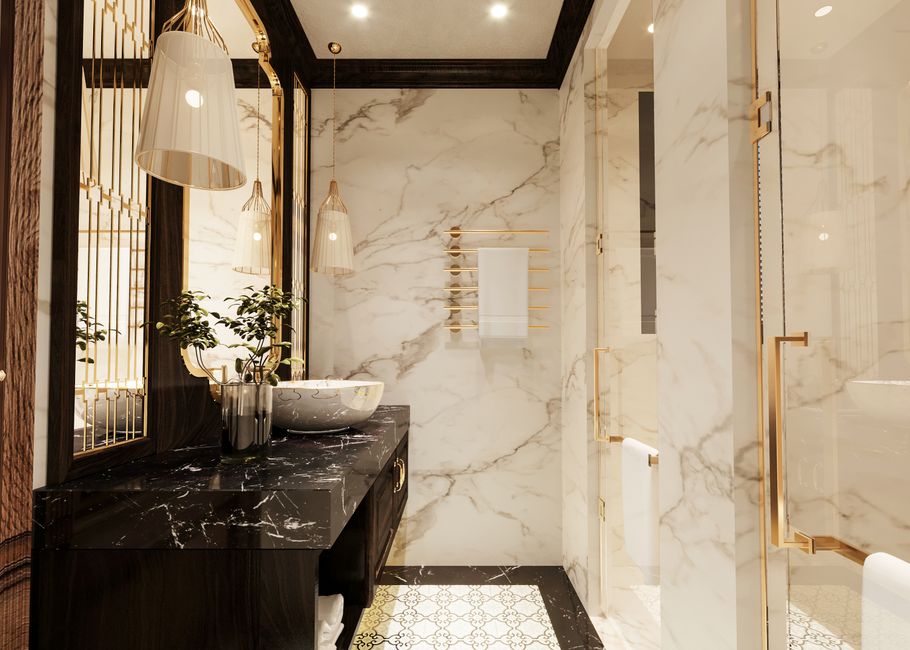
In a hotel, the clutter-free bathroom is enforced. There is nowhere to put your "stuff," so you don’t bring it. At home, we treat the bathroom like a utility closet. To replicate that hotel feeling, you don’t need a six-figure renovation; you need a ruthless edit. Before you even think about lighting or fixtures, take everything off your vanity. Everything. If you don't use it every day, it belongs in a drawer or a basket under the sink. Visual noise is the enemy of relaxation.
Why Lighting Temperature Changes Everything
If you take one thing from my eleven years in the industry, let it be this: lighting is the silent killer of bathroom ambiance. In a previous project, I watched a client spend thousands on a designer mirror only to mount it under a cool, sterile 6000K LED bulb. It made the room look like a surgery clinic. I’ve seen similar frustrations play out in articles online—take, for example, a recent piece I read via my Bendigo Advertiser subscription. I was scrolling through the lifestyle section, trying to find some design inspiration, only to land on a gallery that promised "dream bathrooms." The photos looked beautiful—likely sourced from Shutterstock or similar high-end lifestyle stock sites—but the accompanying text was maddeningly vague. They talked about "warm, inviting atmospheres" without explaining how to actually achieve them.
To get that hotel vibe, you need to understand the concept of layered lighting without getting bogged down in the technical jargon that manufacturers love to throw at you. You don’t need to know the physics of lumens; you just need to know how to create zones.
- Ambient lighting: This is your general light. Avoid the centre-of-the-ceiling bulb if you can. It creates shadows under your eyes that would make a horror movie extra look tired. Task lighting: This is where you see what you’re doing—shaving, applying makeup, brushing. This should be focused at eye level. Accent lighting: This is the secret sauce. A dim light near the floor or a gentle glow behind a mirror transforms the room from "utility" to "sanctuary."
If you’re looking to upgrade, I often direct people to the LED Mirror World website. It’s a great starting point because they actually focus on the mirror as a light source rather than just a reflection surface. When you’re browsing, look for options that allow for colour temperature adjustment. Being able to shift from a crisp, cool light for morning preparation to a soft, warm glow for an evening soak is the closest thing to "hotel mode" you can get in a residential setting.
The Reality of Pricing and Marketing
Speaking of that Bendigo Advertiser article I mentioned earlier, the most frustrating part wasn't the lack of design advice—it was the absence of practical information. The article showcased these gorgeous rooms, suggested high-end fittings, and then… nothing. No price tags, no budget brackets, no "save vs. splurge" advice.
As a former consultant, I find this infuriating. Marketing teams love to use buzzwords like "bespoke," "curated," and "elevated" to distract you from the fact that they aren't giving you the info you need to make a decision. I refuse to play that game. I won't invent prices for you because I’ve seen how quickly the market shifts. A bathroom renovation is a massive investment; telling you that you can achieve a "luxury look" for a specific low figure is disingenuous at best and predatory at worst. When you are looking at products—whether it's on the LED Mirror World platform or in a physical showroom—always prioritise transparency. If they won't list the price or provide ambient lighting bathroom a clear quote, take your business elsewhere.
My Running List: Small Changes That Change the Whole Room
You don't need to rip out the wall tiles to feel better in your bathroom. My "Small Changes" list is something I’ve kept since my second year in the industry. These are the adjustments that yield the highest "calm-to-effort" ratio.
The Change Why it works Swap your bulbs Switch to 3000K warm white. Avoid anything over 4000K unless you enjoy looking like you're in a high-security prison. Mirror Placement Check the angle. If your light is bouncing directly off the mirror into your eyes, you'll never feel relaxed. Declutter the bench Seriously, hide the dental floss. Keep only one or two "pretty" items out. Upgrade your towel game A single high-quality, plush towel is better than five thin, old ones. Introduce a plant The psychology of greenery in a bathroom is real. It softens the hard surfaces of porcelain and glass.The Psychology of Luxury: It’s Not About the Marble
When we talk about the "luxury" of a hotel bathroom, we are often talking about the psychology of the ritual. At home, the bathroom is where we rush to get the kids ready, where we frantically brush our teeth before a Zoom call, or where we scroll through our phones while sitting on the toilet. In a hotel, that association is broken.
To recreate this, you have to change how you use the room. That starts with calm lighting. If you walk into your bathroom and flick on a switch that illuminates the room like a football stadium, your brain immediately goes into "go mode." If you walk into a dimly lit space with a warm, ambient glow, your parasympathetic nervous system—the one responsible for "rest and digest"—actually begins to engage.
I always tell my clients to test their lighting in the evening. Turn off all the house lights and walk into your bathroom. If you feel like you need to squint, you have too much light. If you feel like you can't see your face, you need better task lighting at the mirror. It is about balance, not brightness.

Final Thoughts: Don't Just 'Renovate'
I’m going to be very clear: I hate the advice that tells people to "just renovate" when they’re feeling unhappy with their home. That is advice from people who don't have to live within a budget or manage a tradie’s schedule. Renovating is a massive commitment of time, money, and sanity.
You can create a space that feels like a retreat without tearing out a single tile. Start by looking at your lighting temperature, move your mirror if the current placement feels awkward (or install an LED-lit mirror to fix the shadows once and for all), and clear the clutter. If you treat your bathroom like a ritual space rather than a storage facility, you’ll find that you don’t need a hotel key card to feel like you’re on a holiday.
And if you find yourself struggling to navigate the jargon or the endless marketing fluff on various websites, remember: if the lighting is too bright, if the mirror is positioned to highlight your pores rather than your face, or if the price is a "mystery," don’t buy it. Trust your gut. You know what "calm" feels like. Now go build it.